
You do not need another reminder that estate planning matters. You need a practical way to address it without legal gray areas or admin drag.
That is where this gets stuck for many financial professionals.
The issue is not whether estate planning belongs in the client conversation. It does. The issue is how to bring it into that conversation in a way that feels clear, useful, and manageable.
You do not need another reminder that estate planning matters. You need a practical way to address it without legal gray areas or admin drag.
The Real Barrier Is Not Knowledge
Most advisors already understand the value of wills, trusts, beneficiary reviews, gifting strategies, powers of attorney, and incapacity planning. They also know that estate planning as part of a broader retirement strategy can create stronger continuity for clients and families.
What gets in the way is execution.
The moment estate planning starts to feel too legal, too technical, or too operationally messy, momentum dies. Good intentions turn into delays. Important conversations get pushed off. And something clients need often becomes something everyone means to revisit later.
That is the gap.
Not a lack of awareness. Not a lack of interest. A lack of a practical, repeatable way to help clients move from “we should do this” to “this is getting done.”
Why This Matters Right Now
This conversation is getting more urgent, not less.
Cerulli projects that roughly $124 trillion will transfer through 2048. Of that, about $105 trillion is expected to go to heirs and $18 trillion to charity. (Cerulli Associates)
That should change the way estate planning gets framed.
This is not a side topic. This is not a “nice to have” conversation for later. This is money moving, decisions changing hands, and families being asked to carry out intent under pressure.
Cerulli also says Generation X is expected to inherit the greatest share over the next 10 years, making this a current planning issue, not some far-off demographic talking point.
Where the Drag Shows Up
The challenge is not just the topic itself. The challenge is the drag that comes with it.
Legal Drag
Advisors want to help. But they do not want to cross the line into legal advice.
And that hesitation makes sense.
The moment the conversation drifts too far into legal interpretation, the role gets blurry fast. That is when many advisors pull back, not because the issue is unimportant, but because they don’t want to create risk for the client or for themselves.
Operational Drag
Even when the conversation starts well, the process can get clunky.
More paperwork. More follow-up. More loose ends. More coordination. More chances for the whole thing to stall out.
Even good planning ideas break when they create too much friction.
That is also why clients benefit when estate planning connects naturally to life insurance and long-term care planning instead of living in its own silo. DMI has already positioned estate planning as part of a broader protection and planning conversation in its existing blog content.
The issue is not awareness. It is execution.
Why Clients Feel the Impact First
When estate planning gets delayed, the client pays for it first.
This is not just about missing documents. It is about missed clarity. Missed coordination. Missed preparation before incapacity, death, or family transition forces decisions into motion.
And with such a large share of wealth expected to move to heirs over the coming decades, the pressure on families is only getting bigger. Cerulli’s estimate that about $105 trillion will pass to heirs underscores how often those moments of transition are likely to shape real family outcomes.
Estate planning works best before the crisis, not during it.
That is why the delivery model matters so much. Clients do not just need the topic raised. They need a path that helps them act before life gets messy.
Why This Becomes a Retention Strategy
The client comes first. Always.
But when you help clients prepare before things unravel, you are doing more than checking a planning box. You are helping protect families, preserve intent, and bring clarity to decisions that matter.
That is where estate planning becomes a retention strategy.
Not because the advisor is the center of the story. But because the advisors who help bring structure and momentum to these conversations are often the ones clients and families continue to trust when bigger decisions arrive.
And in a period where wealth is already shifting between generations, that trust matters even more. Cerulli’s finding that Gen X is positioned to inherit the largest share over the next decade is a reminder that these transitions are not theoretical. They are already underway.
Clients do not experience planning in silos. Estate planning, income planning, and protection planning all shape stronger retirement outcomes. DMI’s related retirement-planning content supports that broader framing.
Why Gifting Keeps the Topic Current
Estate planning is not just about what happens at death. It also shows up in the decisions clients can make now.
The IRS says the annual gift exclusion is $19,000 for both 2025 and 2026. That keeps gifting conversations very much in play and makes estate planning relevant in current, practical planning discussions, not just future what-ifs. (IRS)
That matters because gifting can be one of the easiest entry points into a broader conversation about family intent, wealth transfer, and coordination.
What a Better Approach Looks Like
A better approach does not require you to become the attorney or take on a whole new administrative burden.
It means keeping your role clear.
Spot the gap. Raise the issue. Help the client understand what is at stake. Support the next step. Stay in the conversation.
That is how estate planning becomes practical.
That is how it becomes more consistent.
And that is how it stops feeling like a side topic and starts becoming part of a stronger client process.
The Bottom Line
Estate planning should not sit on the sidelines until something goes wrong.
Clients need it before the crisis. Advisors need a way to address it without legal gray areas or operational drag. And with roughly $124 trillion projected to transfer through 2048, this is one of the clearest planning conversations in front of the industry right now.
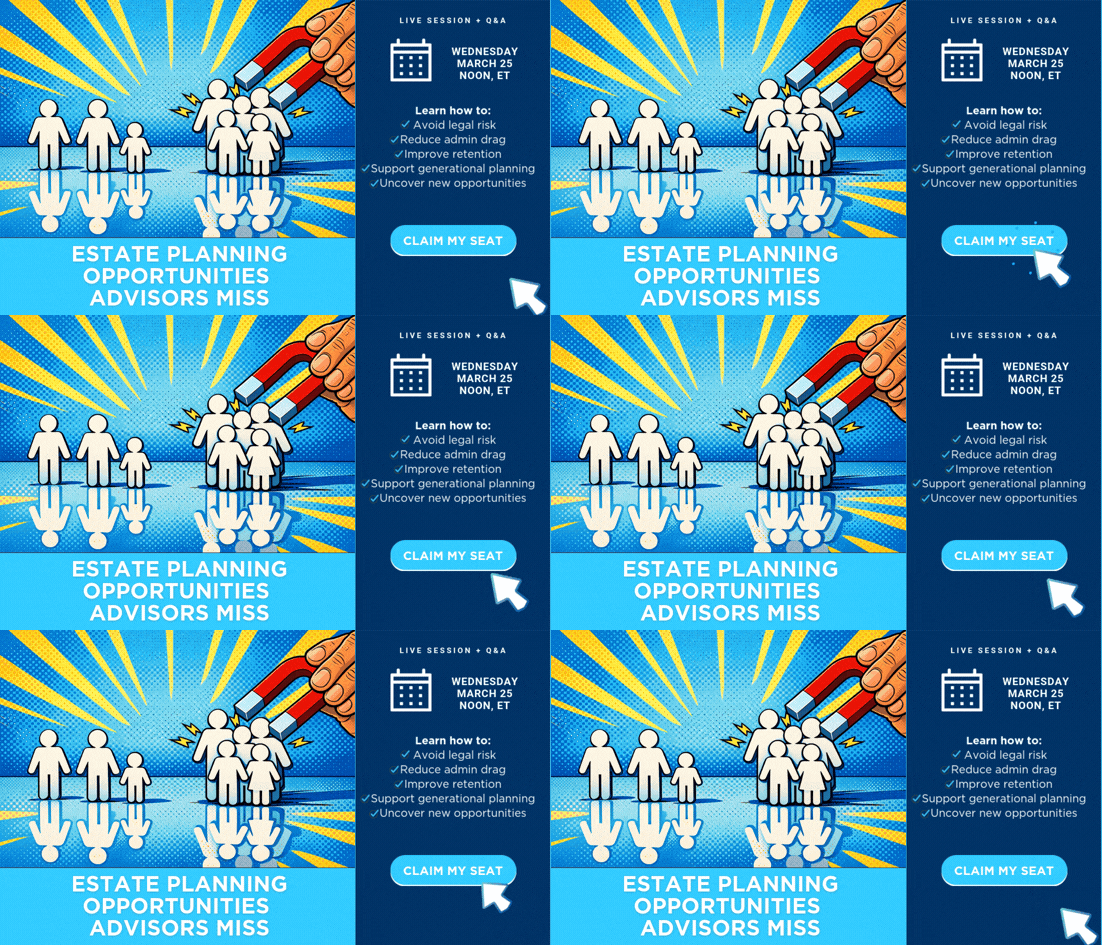
That is exactly why we are hosting our upcoming webinar on March 25th.
🗓 Wednesday, March 25 | 🕛 Noon ET | 💻 Live 60-minute session
Join us to see how estate planning can become part of your client process without added workload, overhead, or legal risk—and why getting this right can help you serve clients better when the stakes are highest.
RELATED READING:
Time to Update Retirement Thinking

Erick Lindewall
VP of Annuity Sales
Not your average wholesaler. Erick Lindewall brings 35 years of industry grit and insight to every conversation—and helps advisors do the same. He’s not here to push products. He’s here to engineer results.
Before joining DMI, Erick spent over 25 years as an External Variable Annuity Wholesaler—and cut his teeth as a financial advisor and sales manager before that. He’s worked across every major distribution channel. What does that mean for you? He knows what it’s like to be in your seat.
Or Call 781-919-2368
